Mindfulness in Therapy: Responding Rather Than Reacting
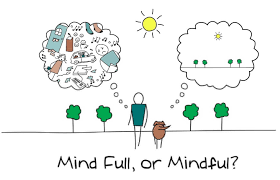
In addition to CBT and ACT, I integrate mindfulness into therapy when it seems likely to be helpful for a client.
I often describe mindfulness as a way of training attention. It involves bringing attention to the present moment, intentionally and with curiosity, rather than functioning on autopilot. Rather than trying to empty the mind or force relaxation, mindfulness involves noticing what is already there : thoughts, emotions, and bodily sensations , and learning to observe them without immediately getting carried away by them or reacting automatically.
Our minds naturally tend to wander. Often, they move toward worries about the future, self-criticism, or replaying difficult moments from the past. Mindfulness helps us notice when attention has drifted and gently bring it back to the present moment, again and again.
In ACT, mindfulness can help people observe difficult or unhelpful thoughts with more distance, rather than becoming caught up in them. In CBT, it can also help people become more aware of certain patterns of thinking, emotional reactions, and impulsive behaviours. Over time, this can help create more space to respond intentionally rather than reacting automatically.
Mindfulness is a skill that develops through practice. This may involve brief guided exercises such as breathing practices, grounding exercises, or body scans, as well as bringing fuller attention to everyday activities like walking, eating, or pausing during stressful moments. In therapy, we may begin with brief exercises during sessions and, where appropriate, gradually integrate these tools into daily life between sessions.
Research suggests that regular mindfulness practice may support attention regulation, emotional awareness, and psychological flexibility. For many people, it becomes a more flexible and less reactive way of relating to difficult internal experiences, rather than constantly trying to avoid, control, or struggle against them.
Mindfulness is not about eliminating thoughts, “thinking positively,” or achieving a constant state of calm. The goal is to develop a different relationship with thoughts and emotions so that they have less automatic influence over behaviour and daily life.

Lucie Ramet
Chartered Psychologist, CBT & ACT Therapist
Hove, East Sussex
·
Online therapy in French and English